Can you recall your recent conversation with an AI? Was it definitive, or did you need to explain yourself better? Moreover, after it all, were you satisfied? Did you feel validated at the end?
These questions are important as we see AI technology getting embedded in our home appliances. Yes, in addition to being easily accessible across wearables and handheld devices, the use of AI chatbots or conversational AI technology has increasingly become more personal.
While on one hand, we use AI to learn answers about products and services, it is also ordinarily used to discuss potential suicidal planning or intent.
Let’s explore these and other phenomena that affirm how conversational AI or AI chatbots are the fundamental need for your business, regardless of your industry or operational scale.
Understanding Conversational AI
AI chatbots are not the only form of conversational AI that is widely used by millions of users across the globe. While AI companies like OpenAI, Gemini, Perplexity, and DeepSeek compete for a larger market share, enterprises like Adobe are leveraging these technologies cumulatively.

Although we are yet to see other enterprises adopt this multi-AI strategy, conversational AI already serves 987 million global users. The market is projected to reach $49.8 billion by 2031. Over 95% of customer interactions are now AI-powered, while enterprise adoption jumped from 60% (B2B) to 78% across at least one core function
The 2026 Market Surge: Numbers That Define the Future
The rise of voice AI 2026 is undeniable. The global market size for AI voice agents leaped to $3.5 billion in 2026, projected to grow at a staggering 39.0% CAGR through 2033. Driving this is the massive shift from generic text bots to dynamic conversational voice AI agents. According to Gartner projections for 2026, conversational voice AI agents and related automated technologies are on track to reduce contact center labor costs by $80 billion globally. This scale proves that voice agent technology growth is moving from experimental pilots to core enterprise infrastructure.
The Everyday Reality of Conversational AI
Economists at OpenAI and Harvard analyzed 1.5 million ChatGPT conversations from November 2022 through July 2025. Their findings reveal a striking shift.
AI chatbots handle mundane, routine tasks daily. More than half of consumers now expect to use AI assistants for shopping by year's end. Yet this convenience masks complexity. Around 0.15% of weekly ChatGPT users discuss explicit indicators of suicidal planning or intent, while 0.05% of messages contain suicidal ideation markers.
These statistics reflect the dual nature of conversational AI bots. They serve practical commercial needs and deeply personal psychological support moments. The technology doesn't discriminate by use case. It simply responds.
Multi-Model Strategies Reshape Creative Industries
Adobe's agentic AI approach demonstrates how conversational virtual assistants integrate across professional workflows. The conversational panel in Photoshop Web lets users instruct the software through natural dialogue. Photoshop understands tool selection requirements while maintaining full editability. This marks a departure from menu-driven interfaces toward intent-based interaction.
Third-party AI integration follows suit. Adobe's Generative Fill now accesses Google Gemini 2.5 Flash (Nano Banana) and Black Forest Labs' FLUX.1 Kontext. Each model brings distinct strengths, like detail preservation versus character consistency. The strategy mirrors how healthcare IT consulting companies recommend best-of-breed solutions rather than monolithic platforms.
Market Realities vs. Investment Euphoria
While conversational AI delivers measurable value, market dynamics tell a cautionary tale. A Massachusetts Institute of Technology study found that approximately 95% of generative AI business efforts fail. Only 5% achieve meaningful revenue growth despite $44 billion in startup investment during H1 2025 alone.
AI-related capital expenditures contributed 1.1% to U.S. GDP growth in early 2025. Yet this concentration creates vulnerability. IMF Managing Director Kristalina Georgieva warns that current valuations approach dot-com bubble levels. The disconnect between innovation and monetization capacity widens daily.
For businesses evaluating AI integration services, this matters. Deployment must target specific, measurable outcomes. Custom healthcare software development companies increasingly focus conversational AI on triage automation, appointment scheduling, and remote patient monitoring - areas with clear ROI metrics.
Security Applications Demonstrate Tangible Value
Conversational AI now powers anti-scam measures across banking and e-commerce platforms. Starling Bank deploys AI to identify fraudulent activities on Facebook Marketplace, eBay, Vinted, and Etsy. The system analyzes transaction patterns, user behavior anomalies, and linguistic markers of scam attempts in real time.
This application illustrates how healthcare virtual assistants and virtual assistants in healthcare settings deploy similar pattern recognition. A remote patient monitoring virtual assistant flags physiological data deviations just as fraud detection systems identify transactional anomalies. The underlying NLP, machine learning, and anomaly detection architectures converge across industries.
Publishing and Content Creation Adoption
Bloomsbury, a major book publisher, reports that authors increasingly use conversational AI to overcome writer's block. The technology assists with ideation, outline development, and draft refinement. While creative control remains human, AI accelerates production timelines and reduces blank-page paralysis.
This mirrors how healthcare IT solutions streamline clinical documentation. Physicians use AI voice assistants to transcribe patient encounters, suggest diagnostic codes, and pre-populate electronic health records. The productivity gain isn't just theoretical. It's measurable in reduced administrative burden and increased patient face time.
Conversational AI Healthcare Adoption Accelerates
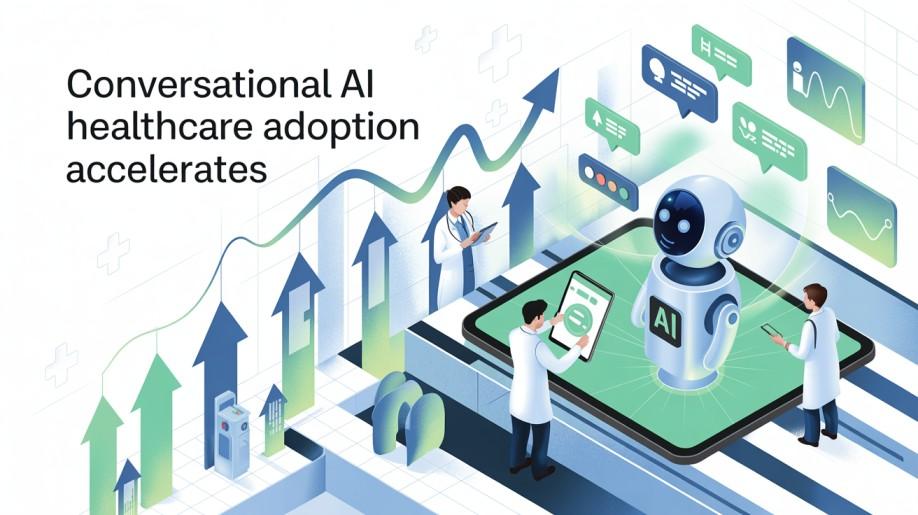
AI voice agents in healthcare are projected to reach a market value of $16.9 billion by 2025. By 2027, 75% of providers are projected to deploy voice-based solutions. Current adoption stands at 63% of U.S. healthcare organizations piloting or actively using AI voice technology for patient engagement.
Results demonstrate impact. No-show rates drop 25-30% with automated appointment reminders and confirmations delivered via conversational AI. Triage automation through AI chatbots routes patients to appropriate care levels before human clinician involvement. This aligns perfectly with conversational AI triage strategies that reduce emergency department overcrowding.
When integrated with conversational AI in healthcare patient engagement, these systems maintain continuity across care episodes. They enable 24/7 symptom assessment, preliminary diagnosis suggestions, and urgency classification.
Technical Architecture Considerations
Modern AI voice assistants deploy natural language processing, text-to-speech synthesis, automatic speech recognition, and dialogue management systems. The distinction between voice AI vs AI voice agents vs conversational AI matters for implementation. Voice AI handles speech-to-text conversion. AI voice agents execute tasks autonomously. Conversational AI manages context-aware dialogue across multiple turns.
Healthcare implementations require HIPAA compliance, data encryption at rest and in transit, and audit logging. Working with experienced healthcare IT solutions providers ensures regulatory adherence while maintaining conversational quality. A voice AI development partner brings domain expertise in clinical workflows, terminology databases, and integration with existing EHR systems.
Evolution of the Stack: LLMs and Reduced Latency
The latest conversational AI voice trends point toward unified architectures. Previously, systems relied on disjointed processes. Today, an LLM-powered voice agent integrates reasoning, generation, and output in a single pass. This minimizes voice AI latency to below 600 milliseconds, mimicking the natural flow of human dialogue.
By utilizing a robust speech-to-text LLM, businesses achieve highly accurate, real-time voice AI interactions that can handle code-mixed languages and regional accents effortlessly. Furthermore, the push towards a multimodal voice AI framework means that conversational voice AI agents can simultaneously interpret vocal tone, text context, and visual inputs, creating a seamless omnichannel user experience. For organizations prioritizing technical excellence, deploying customized conversational voice AI agents ensures enterprise-grade security and SOC 2/HIPAA compliance out of the box.
E-Commerce and Retail Transformation
Retailers using conversational AI bots report 4X conversion rate increases. Shoppers engaging with chatbots complete purchases at 12.3% rates versus 3.1% for non-engaged visitors. The e-commerce conversational AI market will reach $8.65 billion in 2025.
Nearly 97% of retailers plan AI spending increases this year. 89% already tested or deployed conversational solutions. Customer service cost savings approach 30% through AI-driven automation, eliminating $8 billion in global operating expenses for 2025.
These platforms handle product recommendations, inventory checks, order tracking, and return processing. The technology resolves 80% of routine inquiries without human intervention. Response times accelerate threefold compared to traditional support channels.
Internal Enterprise Use Cases
Fortune 500 companies report 80%+ using ChatGPT internally. Approximately 10.8% of employees incorporate AI into daily workflows. HR departments deflect 75% of routine queries to conversational bots, freeing staff for strategic initiatives.
Internal productivity bots handle IT help desk tickets, benefits enrollment, policy clarification, and training module delivery. The ROI often exceeds 1000% by reducing support labor hours, estimated at 2.5 billion hours saved globally in 2025.
Expanding Horizons: Enterprise and D2C Applications
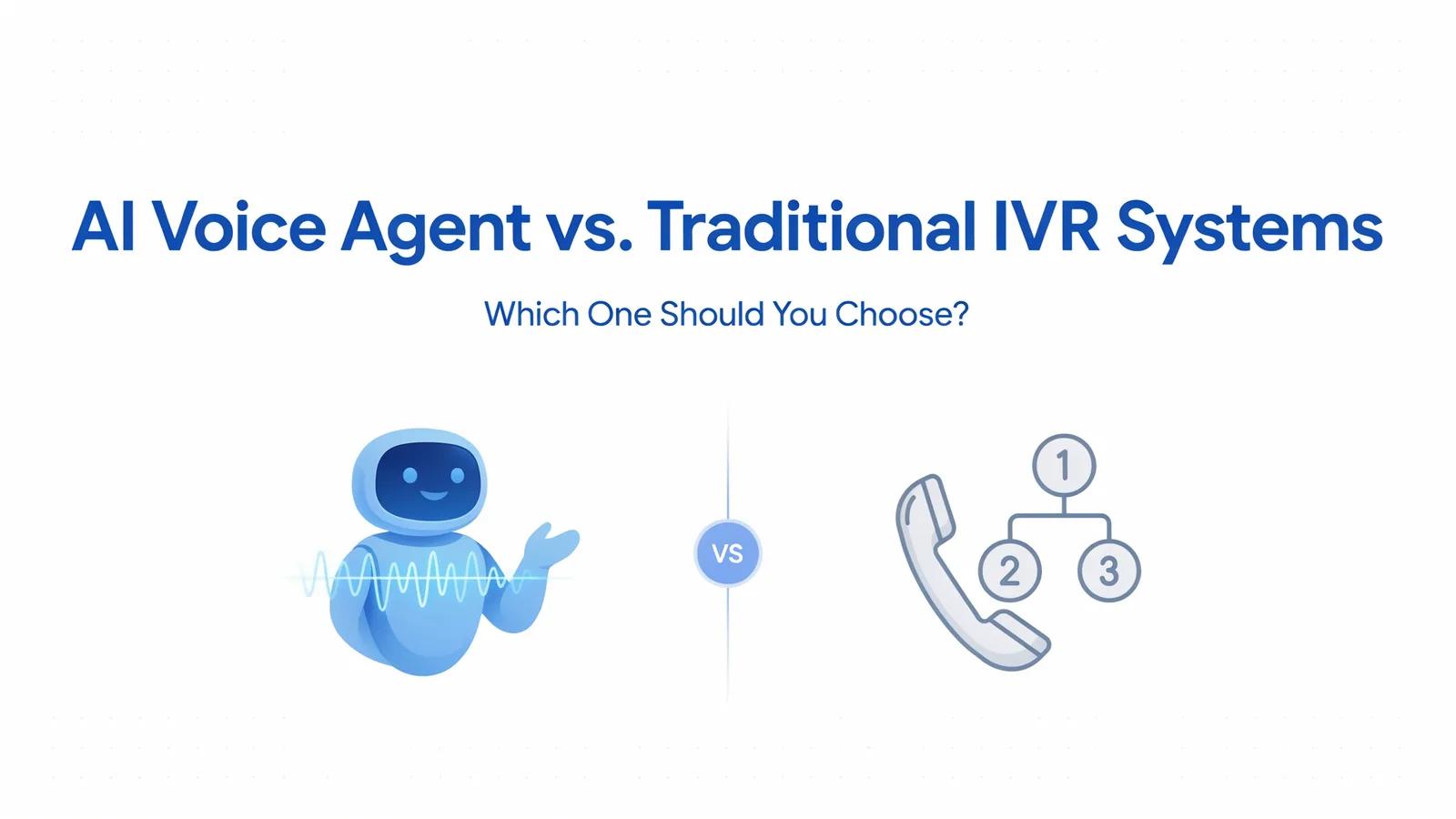
The AI voice assistant enterprise landscape is rapidly moving past simple internal FAQs. In direct-to-consumer (D2C) sectors, conversational voice AI agents are entirely replacing legacy IVR systems. Traditional IVRs cause call abandonment rates as high as 35%. By deploying these advanced systems, modern contact centers target abandonment rates below 2%, lifting customer satisfaction scores by up to 25 points in the first 90 days.
Among the top voice agent use cases in 2026 are end-to-end order resolution, outbound appointment scheduling, multilingual post-purchase support, and real-time logistics tracking without human intervention. To fully capitalize on this automation, brands are partnering with specialized providers. You can explore how tailored architecture drives ROI by reviewing comprehensive AI voice agent development services to build your next-generation system. In an era where customers despise waiting on hold, conversational voice AI agents serve as a critical competitive differentiator.
Conversational AI Implementation for Decision-Makers
For leaders evaluating conversational AI adoption, several factors determine success:
- Use Case Specificity: Deploy AI for well-defined tasks with measurable KPIs. Avoid vague "transform our business" mandates that lack concrete success criteria.
- Data Readiness: Conversational AI quality depends on training data volume, diversity, and accuracy. Organizations must audit existing customer interaction logs, knowledge bases, and historical transcripts.
- Integration Complexity: Legacy system connectivity often determines implementation timelines. RESTful APIs, webhook support, and middleware platforms facilitate smoother deployments.
- Vendor Selection: Choose partners offering AI consulting to assess readiness, AI agent development for custom solutions, and staff augmentation when internal expertise gaps exist in your team.
- Pilot-First Approach: MVP development services enable controlled testing before full-scale rollout. Validate assumptions, refine conversational flows, and measure impact metrics during limited deployments.
- Ongoing Optimization: Conversational AI requires continuous refinement. User feedback loops, conversation analytics, and A/B testing of dialogue variations improve performance over time.
Onboarding Conversational AI: The Strategic Imperative
Conversational AI voice agent adoption isn't optional for competitive organizations. The technology delivers documented cost savings, revenue increases, and customer satisfaction improvements. Healthcare providers reduce administrative burden. Retailers capture sales previously lost to friction. Enterprises automate repetitive employee support.
Yet success requires strategic planning. Understanding the difference between agentic AI solutions and simple chatbots informs architecture decisions. Partnering with experienced AI voice agent development specialists accelerates deployment while avoiding common pitfalls.
For healthcare organizations specifically, working with a custom healthcare software development company ensures clinical workflow integration, regulatory compliance, and specialized terminology handling. Acquiring or hiring generative AI development expertise also enables obtaining advanced capabilities like symptom-based triage, personalized patient education, and predictive health monitoring.
What's Next Ahead: Looking Forward!
The conversational AI market continues its trajectory toward $132.9 billion by 2034. Voice interface preference now exceeds text among 49% of U.S. users. Banking and retail allocate 46% of tech budgets to dialogue systems. Enterprise RAG adoption jumped from 31% to 51% in 2024 alone.
These numbers validate strategic investments in conversational technology. As Adobe demonstrates with multi-model creative assistants, and healthcare providers prove through triage automation, AI-powered dialogue transforms operational efficiency and user experience simultaneously.
The question isn't whether to adopt conversational AI. It's how quickly organizations can deploy solutions that deliver measurable business value while maintaining quality, security, and user trust. Those who act decisively gain competitive advantages. Those who hesitate will cede ground to faster-moving rivals already reaping documented benefits.
FAQs
Q. What is conversational AI and how does it work?
Conversational AI combines natural language processing, machine learning, and speech recognition. It enables bots and voice assistants to understand human language, interpret context, and respond intelligently through text or voice. Modern systems can personalize interactions and improve with use.
Q. Why are the voice AI agents growing in popularity in 2025?
Voice AI agents are rising in popularity because users want fast, hands-free support. Nearly 49% of U.S. consumers favor voice over text. They improve accessibility, speed, and satisfaction rates across customer service and healthcare settings.
Q. Which industries use conversational AI the most?
Conversational AI is widely used in healthcare for virtual assistants and triage, in retail for customer engagement and sales, and in banking for fraud prevention and support. Adoption is highest in healthcare (63%) and retail (97% plan increased AI use).
Q. What are key statistics for AI chatbot adoption in 2025?
About 987 million global users rely on conversational AI. Over 95% of customer interactions are AI-powered, and the market is expected to reach $49.8 billion by 2031.
Q. How is conversational AI transforming healthcare and retail?
Healthcare providers use AI voice assistants to reduce no-shows by up to 30%, automate appointments, and power remote monitoring. Retailers employ bots for inventory, orders, and recommendations, in addition to handling 80% of routine inquiries, increasing conversion rates, and cutting costs.
Q. How do conversational AI bots improve customer engagement?
These conversational AI bots respond instantly, personalize answers, and support users 24/7. They enhance satisfaction, free staff for strategic work, and handle large interaction volumes across industries and connected multi-agent systems.
Q. What is the ROI of deploying conversational AI bots?
Conversational AI bots deliver 4X higher conversion rates in retail. Businesses save up to 30% in customer service costs. In healthcare, automation leads to more efficient patient flow and administrative savings.